
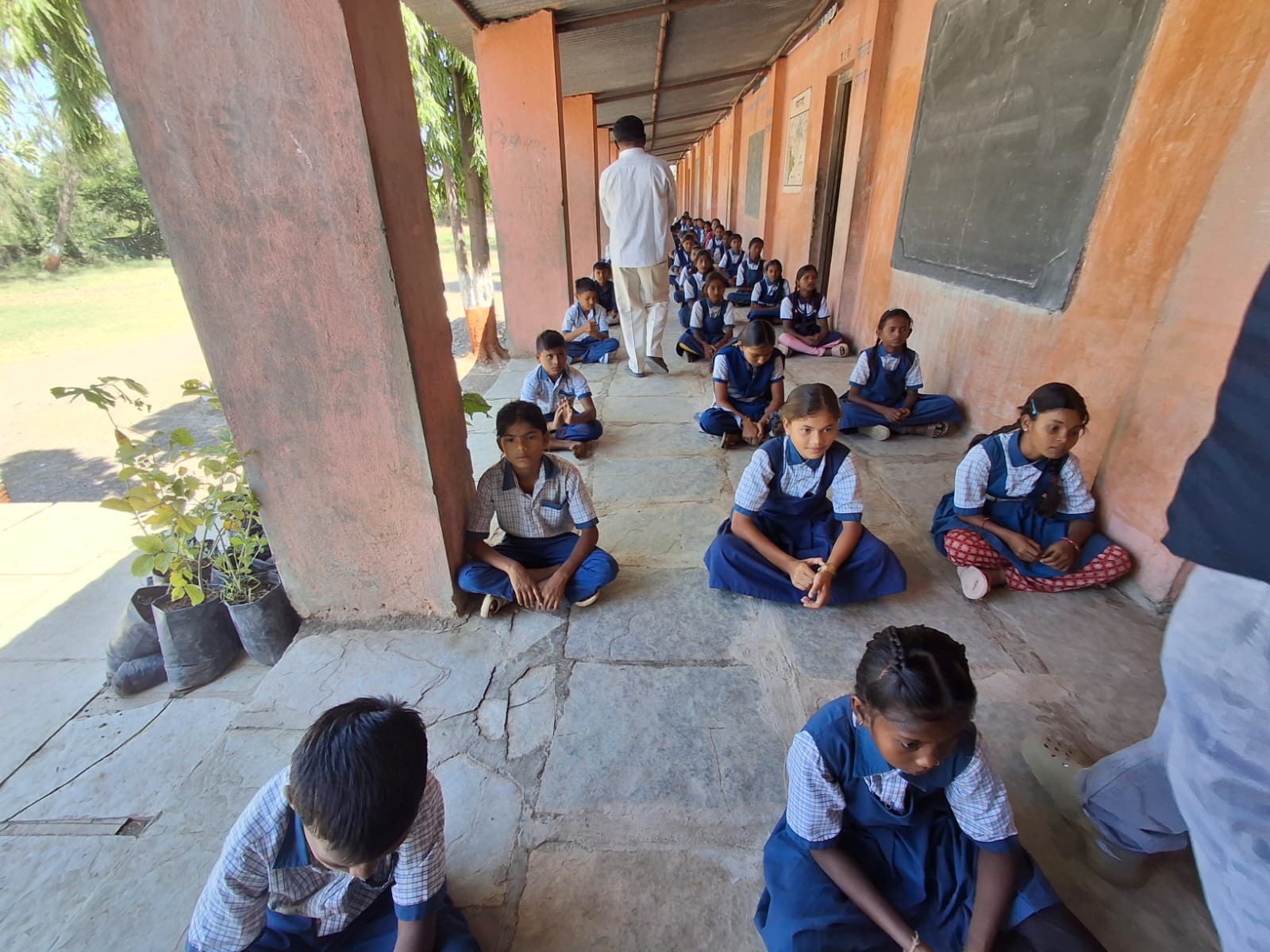
When we speak of India’s development, we often focus on economic growth, modern technology, employment opportunities and global competitiveness. These are undoubtedly important. However, alongside this progress, we must also reflect on whether society is developing a strong sense of integrity, responsibility, reason and concern for the common good. The true strength of a nation lies not only in its economic capabilities but also in the values, conduct and character of its people.
Education is one of the most important foundations for building such a responsible and ethical society. Therefore, strengthening schools across India, particularly those serving rural communities and remote settlements, must remain a central priority.
Education: Beyond the Means of Livelihood
Today, education is largely associated with employment, financial stability and professional advancement. While education plays a vital role in making individuals economically independent, its purpose cannot be limited to securing a good job or achieving financial success.
Swami Vivekananda’s philosophy of education emphasised character building, self-confidence, the development of human potential and the manifestation of the perfection already within an individual. His vision encourages us to understand education as a process that goes beyond the acquisition of information.
Education should enable individuals not only to acquire knowledge but also to think independently, distinguish between right and wrong, and understand the consequences of their actions. Knowledge must be accompanied by discernment, skills by character, and personal progress by a sense of social responsibility.
In this broader sense, education is not merely a means of economic advancement; it is a process of intellectual, ethical and social development. It should empower individuals to recognise their abilities and use them not only for personal growth but also for the welfare of society.
The Role of Schools in Building an Ethical Society
Ethical values do not develop through lectures and instructions alone. They are shaped by everyday experiences, the surrounding environment and the conduct people observe. Honesty, equality, cooperation, discipline, empathy and respect for public resources require an environment in which children can understand and practise these values from an early age.
Schools are important spaces for creating such an environment. Education must prepare students not only for examinations but also for life. The freedom to ask questions, opportunities for discussion, a culture of reading, scientific thinking and sensitivity towards social issues should all form part of the learning experience.
Rather than merely imposing ideas, education should encourage students to reason, examine evidence and take responsibility for their decisions. An understanding of the constitutional values of justice, liberty, equality and fraternity can further strengthen their sense of citizenship.
The responsibility of building an ethical society does not rest on schools alone. Families, communities, public institutions and role models also influence the development of children. Nevertheless, schools remain essential institutions that can connect these influences and provide every child with opportunities to learn and grow.
Rural Schools: A Foundation for Nation-Building
For India’s development to be inclusive, access to quality education must extend to every child. A child’s village, economic circumstances or social background should not determine the quality of educational opportunities available to them.
Rural schools are important educational and social institutions within their communities. For many children, they provide one of the principal opportunities to access knowledge beyond their immediate surroundings. Strengthening these schools is therefore not merely an educational concern; it is also a matter of social justice and equal opportunity.
An empowered school is more than a well-constructed building or a set of adequately equipped classrooms. It requires trained teachers, quality teaching, appropriate learning materials, access to reading resources, a safe environment, attention to students’ needs and meaningful parental participation.
Children studying in rural schools will contribute to India’s future in diverse fields. They may become farmers, teachers, scientists, entrepreneurs, public administrators or elected representatives. Their values and judgement, alongside their knowledge and skills, will influence the society they help shape.
Investing in rural schools today is therefore an investment in the intellectual, social and ethical strength of India tomorrow.
A Culture of Reading: Strengthening the Educational Experience
Alongside curriculum and classroom teaching, developing a culture of reading is essential to improving the educational experience of children. Reading introduces students to ideas beyond their textbooks, enriches their vocabulary, develops their imagination and broadens their understanding of the world.
Books can introduce children to science, history, literature, social life and the thoughts of influential personalities. Exposure to different experiences and perspectives can help them think beyond their immediate circumstances and develop a more informed understanding of society.
Every school should therefore encourage a meaningful culture of reading. Access to suitable books, regular reading opportunities, discussions about books and encouragement to explore subjects independently can help nurture this habit.
The Village Library Initiative of Vaidehi Vatsalya Sankalp Trust seeks to contribute towards this goal. By collecting books and making them available for use in libraries across different villages, the initiative aims to expand children’s access to knowledge and encourage reading.
The significance of such initiatives extends beyond making books available. Their broader purpose is to create opportunities for independent learning, strengthen the relationship between schools and communities, and make knowledge more accessible.
Strengthening the Partnership Between Schools and Communities
Government initiatives and educational institutions play an essential role in strengthening rural education. Active community participation is equally important. Teachers, parents, Gram Panchayats, young people, social organisations and local residents can work together to understand the needs of schools and develop locally relevant educational initiatives.
Some schools may need additional reading materials, while others may benefit from educational activities, guidance or an improved learning environment. Since the circumstances of each village are different, solutions must be designed according to local needs.
In this process, local communities should not be viewed merely as recipients of assistance. They are active partners in educational development. When local knowledge, available resources and collective efforts are brought together, initiatives can become more meaningful and sustainable.
Social organisations can complement these efforts by identifying needs, facilitating educational opportunities, encouraging community participation and supporting continuity in local initiatives.
Empowering Rural Schools, Strengthening India
Nation-building is a long-term process. It cannot be accomplished through a single scheme or within one generation. It requires a sustained commitment to a culture that values knowledge, an educational system that encourages independent thinking, and an environment that nurtures responsible citizens.
The quality of tomorrow’s society will depend, in part, on the education we provide today, the opportunities we create for children and the environment we build for their growth.
If India aspires to become not only economically strong but also thoughtful, compassionate, responsible and ethically grounded, strengthening rural education must be central to its development priorities.
Every village school is more than an institution that educates children in the present. It is an important space where the citizens of tomorrow are shaped.
Empowered rural schools create opportunities for knowledge, nurture thoughtful citizens and lay the foundation for an ethical society. Strengthening these schools is not simply an investment in education; it is an investment in the future of India.